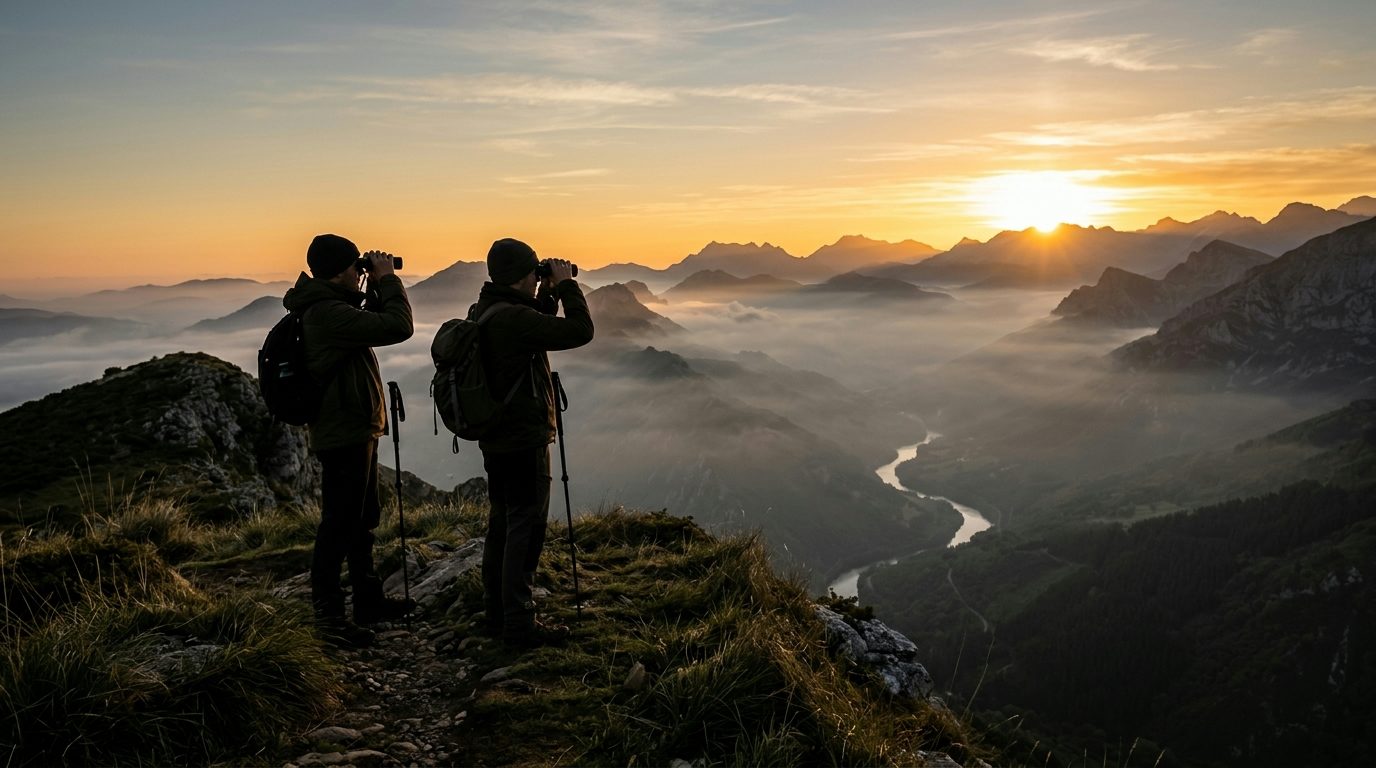
Bear watcher with binoculars on a viewpoint at dawn

The watcher's code of ethics

Responsible bear-watching guide

Seeing a wild brown bear is a privilege that only makes sense if the bear never knows you saw it. These are the rules, the logic behind each one and the gear that turns an encounter into a memory.
The ten rules

Ten rules that protect the bear (and you)

Every rule in this code comes from a real incident. Read them for what they are: the collective memory of those who have lived alongside the Cantabrian bear for decades.

Watch with optics, not with haste

8–10x binoculars or a spotting scope. Watching is an exercise in patience: the bear appears when the valley falls silent.

Use official viewpoints and trails

Never enter pastures, dense oak woods or restricted tracks to "get closer". The bear's territory is respected from its edge.

Keep quiet and never run

A bear's hearing is razor-sharp. If you see it before it detects you, enjoy the moment: any sudden movement will scare it off.

Read the animal's signals

Head-shaking, snorting, pawing the ground or repeated "yawning" are signs of unease: back away slowly.

Dogs always on a lead

A loose dog is the number one trigger of incidents. In bear parks, the lead is not optional.

No flash, no calls, no bait

No whistling, no imitations, no food. The perfect photo is the one the bear never knew was taken.

Pick the season and the hour

May–June and September–October, at dawn and dusk. Respect access restrictions in sensitive breeding areas.

Never at night or with lights

Night watching with lamps dazzles and disorientates the bear. When the sun goes down, the session is over.

With a guide, better for everyone

Accredited companies know the active spots, manage small groups and keep 100% of the benefit in the valley.

Leave the mountain as you found it

Litter, noise and shortcuts stay at home. The bear needs clean, quiet forests: that is the best reward.

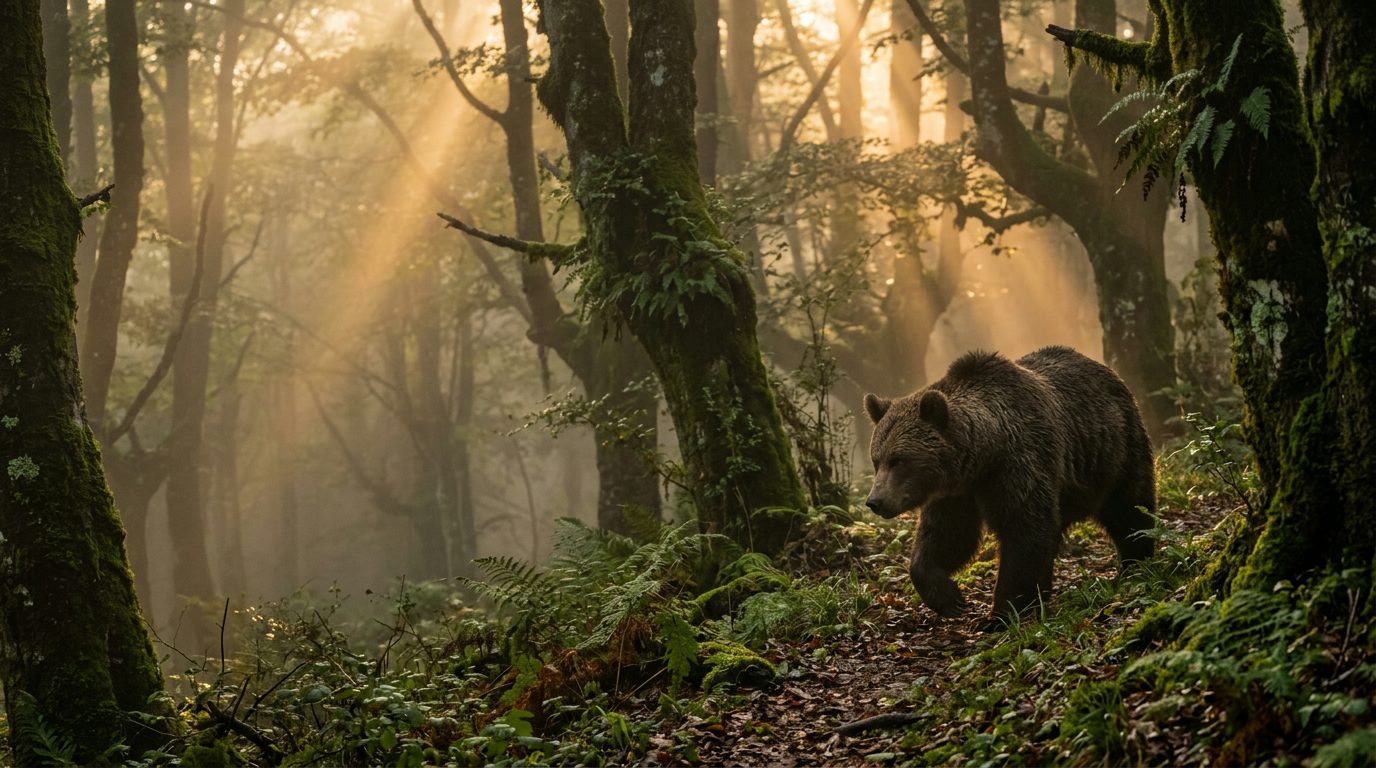
Cantabrian brown bear walking through the forest mist

The logic behind the code

A stressed bear is a doomed bear

Every time a bear flees a careless watcher, it burns energy it needed to survive the winter. Every time a bear links humans with food, it signs its own sentence: "conflict" bears end up relocated or put down.

Responsible watching is not a courtesy: it is the cheapest conservation tool that exists. When you respect the rules, you get the sighting and the bear keeps the valley.

FAQ

Frequently asked questions about bear watching

The questions we get most from first-time bear watchers.

What is the minimum distance for watching a bear?

There is no single legal figure, but the professional rule is clear: if the bear changes its behaviour because of your presence, you are too close. With optics (binoculars or a spotting scope) you enjoy the sight just as much from 100–200 metres or more.

What should I do if a bear approaches me?

Stay calm, do not run (the bear is faster), speak in a low voice and back away slowly without turning your back, always leaving it an escape route. Never get between a mother and her cubs.

Is it allowed to use calls or food to attract bears?

No. Attracting bears with food or calls is illegal, dangerous and condemns the animal: a bear that links people with food ends up as a problem bear and, almost always, a dead bear.

What is the best time of day for watching?

Dawn and dusk, when the bear moves between its resting and feeding areas. In the middle of the day, encounters are rare and almost always accidental.

Can I take my dog to bear areas?

Yes, but always on a lead. A loose dog can trigger a defensive reaction from a mother with cubs or make the bear waste energy fleeing: two scenarios that put both the animal and you at risk.

What should I do if I see a cub on its own?

Leave immediately: the mother is close by, almost always watching. Never touch it or try to "rescue" it: abandonment does not exist in nature, but human recklessness does.

Your first bear outing, done right

Choose your area, choose the season, hire an accredited guide and apply these ten rules: seeing a wild bear is priceless, but it does have rules.