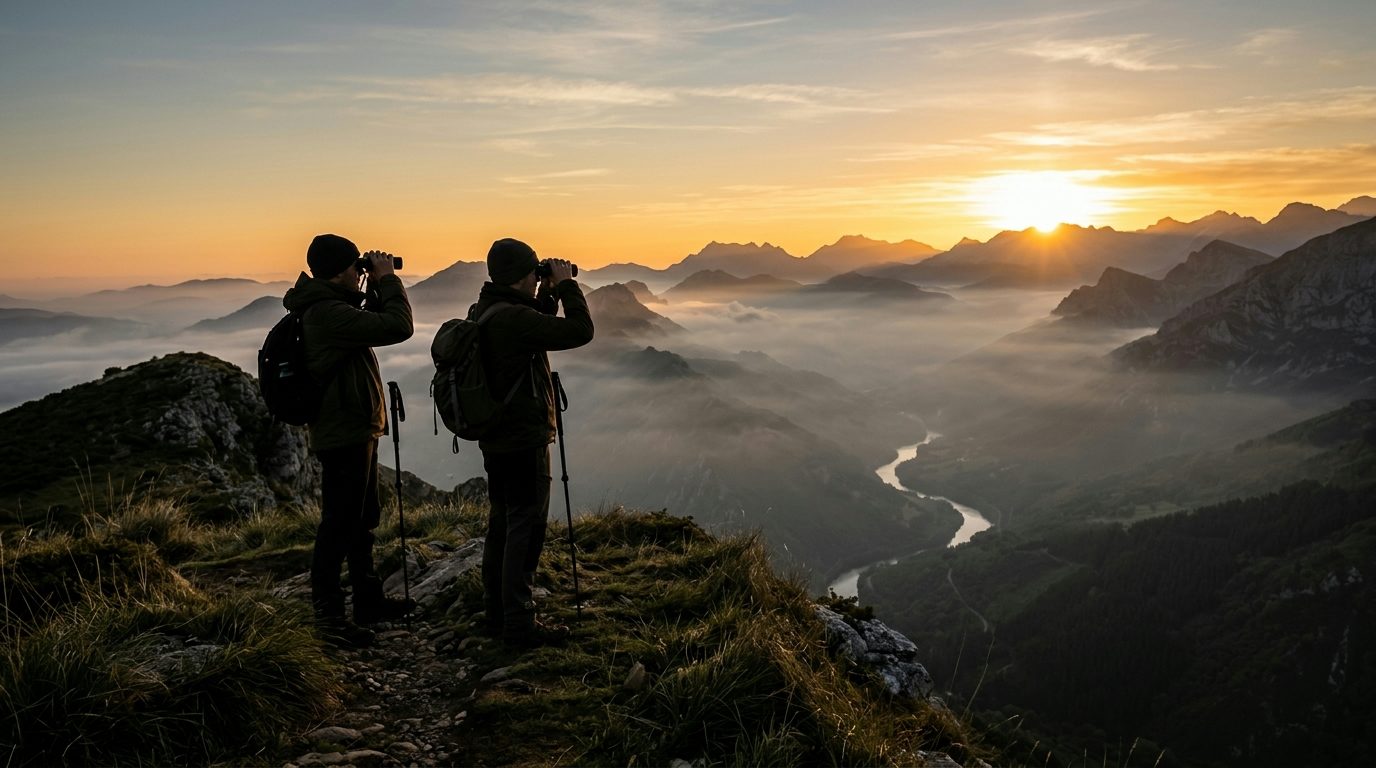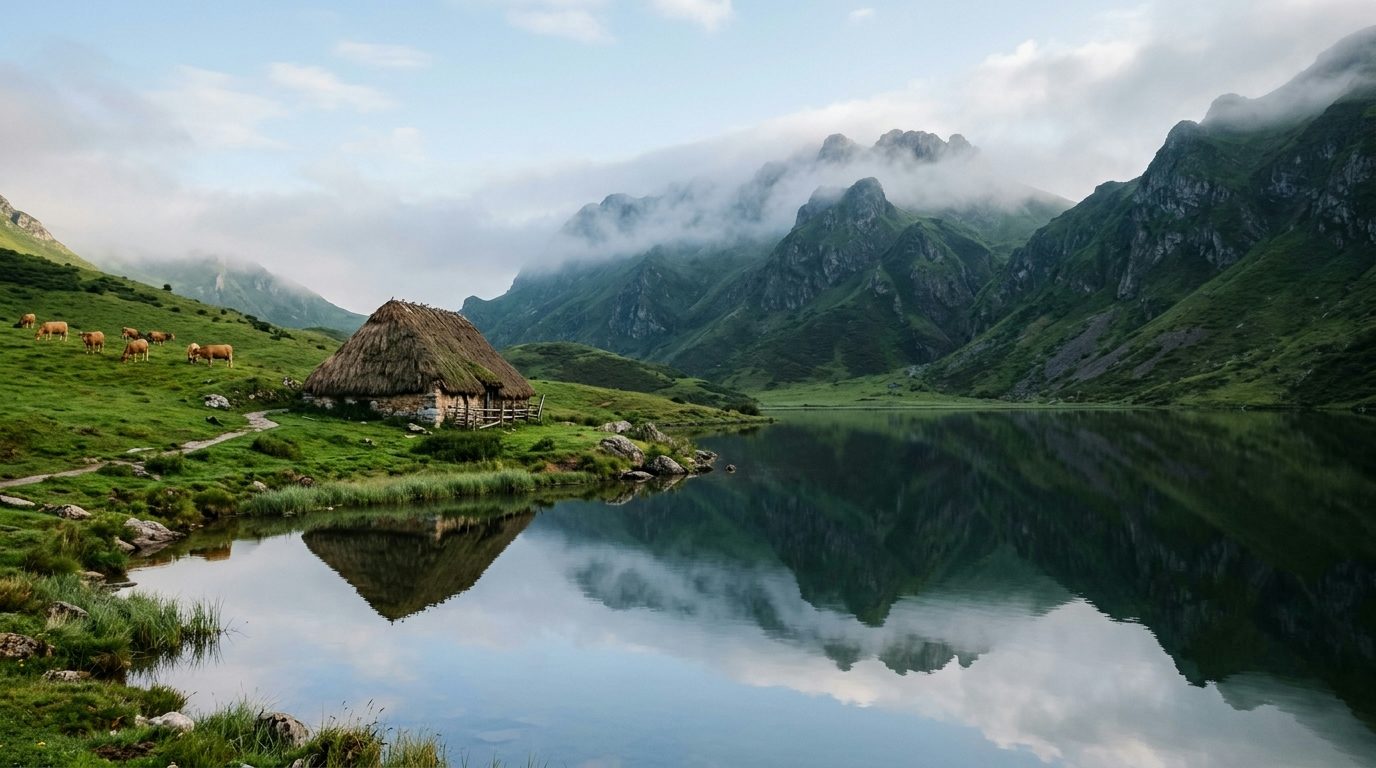
Somiedo has every condition for bear watching: the highest bear density in the Cantabrian Mountains, open valleys with excellent visibility and a network of viewpoints and roads that let you observe without invading the bear’s territory.
The numbers speak for themselves: in the good months, most outings organised by local guides end in at least one sighting. That is not luck — it is biology.
The key seasons for bear watching in Somiedo
Spring (May–June): sows bring their cubs down to the sunny slopes with fresh grass. It is the most thrilling season — watching a cub at play is unforgettable — and also the one that demands the greatest care: a sow with cubs is the only genuinely risky scenario.
Autumn (September–October): hyperphagia. Bears spend up to 20 hours a day eating acorns, chestnuts and blueberries to fatten up before hibernation. They can be seen in oak woods and meadows, often close to the villages, in what is known as the “descent to the valley”.
Where to look: viewpoints and roads
Observation in Somiedo almost always happens from the viewpoints and the verges of the park’s roads (the AS-227 towards the San Lorenzo pass and its branches): bears move across the slopes, and the spotting scopes installed at the official points do the rest.
Licensed guides rotate between areas according to where the activity is — they read the territory — which is why a guided outing multiplies your options compared with going solo from a fixed viewpoint.
- With a guide: local operators in Pola de Somiedo run dawn and dusk outings with a spotting scope. Book several days ahead in season.
- Solo: pick an official viewpoint, sit down, stay quiet and scan the slopes with binoculars. Patience is 90% of it.
- On foot: bear hiking along the park’s waymarked trails, always staying on the path.
How to book a bear-watching outing
Look for operators whose guides are accredited by the park or the Fundación Oso Pardo (Brown Bear Foundation), who work in small groups, use a spotting scope and know the code of good practice. A typical outing lasts 3–4 hours and costs €30–60 per person.
Be wary of anyone who guarantees sightings: that is only possible with illegal baiting. A good guide will tell you the day’s odds and take you to the best place to try.